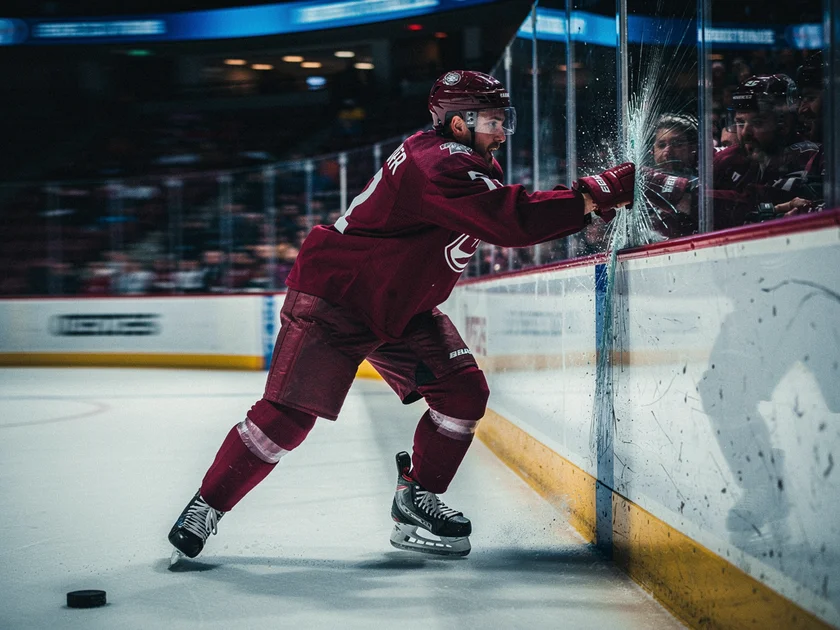
Colorado Avalanche Visit Pittsburgh With Colton Back in Lineup
The Colorado Avalanche travel to PPG Paints Arena on Tuesday to face the Pittsburgh Penguins, with forward Samuel Colton set to return after missing six games while nursing a soft-tissue ailment. Colorado arrives with playoff positioning on the line as the NHL’s stretch run tightens across multiple conferences.
Pittsburgh heads into this matchup shorthanded. Defenseman Shea Theodore’s availability is uncertain after he left Sunday’s game when Winnipeg Jets forward Adam Lowry delivered a hit during a 5-4 shootout loss Saturday. That physical toll from a divisional battle now bleeds directly into Tuesday’s contest.
Colorado Avalanche Injury Report and Lineup News
Colorado’s injury situation entering Pittsburgh is relatively contained compared to their hosts. Colton’s return after a six-game absence gives head coach Jared Bednar a full complement of options up front, restoring depth the Avs had been missing during a stretch where every point carries playoff weight.
The Colorado Avalanche have consistently generated high-danger chances when their top-six forward group is intact, a trend backed by strong five-on-five Corsi numbers over the past three weeks. Colton’s spot on a checking line adds penalty-kill reliability and forechecking pressure — two-way value that rarely shows up in a boxscore but matters enormously in tight playoff races. His 47.3 shot-attempt percentage at even strength this season reflects a player who does the hard work away from the puck. Bednar’s ability to roll four lines with confidence is a distinct edge Colorado carries into road games against depleted rosters.
Pittsburgh’s Walking Wounded: How Many Penguins Are Out?
Pittsburgh’s injury report for Tuesday reads like a roster emergency. Six players are listed as unavailable or questionable, stripping the Penguins of significant depth at multiple positions and forcing lineup shuffles that expose younger, less-tested players against a Colorado team hunting standings points.
The confirmed absences include center Evgeni Malkin (upper body), defenseman Caleb Jones (lower body), forward Kevin Hayes (upper body), forward Filip Hallander (blood clot), center Blake Lizotte (upper body), and defenseman Jack St. Ivany (upper body). Malkin’s absence is the headline loss — a future Hall of Famer whose two-way presence anchors Pittsburgh’s power play and provides veteran leadership that younger Penguins forwards lean on heavily in high-pressure situations. Pittsburgh’s power play ranked 18th in the league entering this week, and without Malkin quarterbacking the man advantage, that number figures to drop further.
Theodore’s status adds another layer of uncertainty. The defenseman left Sunday’s game after absorbing a hit from Lowry — a physical reminder that the Winnipeg-Pittsburgh matchup carried real consequences beyond the final score. Without Theodore, Pittsburgh’s shutdown pair options thin considerably against a Colorado attack that exploits mismatches on zone entries.
Playoff Race Stakes for Both Clubs
NHL.com’s coverage notes that Stanley Cup Playoff races are tight entering the stretch run of the 2025-26 season, with top contenders outside playoff position still very much in the mix. For the Colorado Avalanche, a road win in Pittsburgh would add critical points against a team offering limited resistance given its current roster state.
Colorado’s front office has built this roster to compete deep into May. Nathan MacKinnon’s engine drives the Avs’ offensive structure, while Cale Makar’s ability to run the power play from the blue line creates mismatches that few teams can neutralize. MacKinnon averaged 1.42 points per game during Colorado’s last playoff run, a benchmark that frames just how dangerous this group is when healthy. With Colton back, Bednar can deploy a more balanced four-line attack — a tactical edge that matters when managing a 60-minute road game against a desperate opponent.
Pittsburgh’s situation is more complicated. The Penguins are navigating what looks like a transitional season, and a loss Tuesday would deepen questions about their playoff viability. Over three consecutive seasons, Pittsburgh has found itself in injury-driven spirals at the worst possible time — a pattern that organizational decision-makers must address through roster construction and cap strategy this offseason.
Key Developments Heading Into Tuesday’s Game
Filip Hallander’s blood clot diagnosis carries a notably unpredictable recovery timeline, distinct from soft-tissue designations affecting his teammates.
Ottawa Senators defenseman Thomas Chabot faces an extended absence per NHL.com’s Status Report, a significant blow in the Eastern Conference race that shifts standings math for teams chasing Pittsburgh.
The New York Rangers plan to honor Mika Zibanejad ahead of his 1,000th NHL game, a milestone reflecting the veteran layer present across the league as the regular season nears its close.
NHL.com’s top-contender debate highlights clubs outside playoff position as genuine threats, suggesting Colorado’s current standing demands consistent road performance through the final weeks.
Anthony Stolarz returned to practice with the Toronto Maple Leafs, per NHL.com’s Status Report, adding to the league-wide injury volume picture during this compressed portion of the schedule.
Colorado’s Edge on Paper — and Its Limits
The Avalanche enter Pittsburgh as clear favorites given the Penguins’ depleted roster. Colorado’s depth advantage is pronounced when Malkin, Lizotte, and multiple defensemen sit out simultaneously. The Avs’ penalty kill will face fewer tests against a Pittsburgh power play missing its primary quarterback, and Colorado’s even-strength numbers have been strong enough to sustain offensive zone time against short-staffed opponents.
One counterargument worth acknowledging: road games in Pittsburgh, even against a struggling Penguins squad, carry historical weight. The building generates real noise, and Pittsburgh’s goaltending can steal points on any given night. Colorado cannot treat this as a guaranteed two points — complacency on the road is precisely how playoff positioning erodes in March.
Is Evgeni Malkin playing against the Colorado Avalanche on March 24, 2026?
Evgeni Malkin is listed as out with a soft-tissue ailment and will not dress Tuesday at PPG Paints Arena. Pittsburgh’s power play ranked 18th leaguewide before this week’s games, and his absence removes the primary distributor on that unit, dropping the Penguins’ man-advantage threat to one of the lowest-rated in the conference.
How long was Samuel Colton out before returning for Colorado?
Samuel Colton missed six consecutive games before being cleared for Tuesday’s road trip to Pittsburgh. During that six-game stretch, Colorado’s penalty kill faced added pressure without his forechecking presence, and the Avs went 3-3 in those contests — a record that cost them ground in the tight Western Conference standings.
How did Shea Theodore get hurt before the Avalanche game?
Pittsburgh defenseman Shea Theodore left Saturday’s game after Winnipeg Jets forward Adam Lowry hit him during a contest that ended 5-4 in a shootout win for the Penguins. Theodore logged 21:34 of ice time before exiting, and his absence Tuesday would leave Pittsburgh’s defensive corps averaging fewer than 22 minutes of experience per game among its top four.
Where do the Colorado Avalanche stand in the 2026 playoff race?
NHL.com’s stretch-run coverage characterizes the Western Conference playoff race as compressed, with multiple clubs outside the top eight still within striking distance. Colorado’s current road record — stronger than their home mark through February — gives the Avs a measurable advantage in games exactly like Tuesday’s, where opponent depth is limited and puck possession time favors the visitor.
What is Filip Hallander’s injury and how serious is it?
Pittsburgh Penguins forward Filip Hallander is sidelined with a blood clot, a diagnosis that carries a longer and less predictable recovery window than standard soft-tissue ailments. Unlike the five other injured Penguins carrying upper- or lower-body designations, Hallander’s condition requires medical clearance protocols that typically extend well beyond normal return-to-skate timelines, per standard NHL medical practice.