Tennis News
Tennis Retirement News: Who Is Walking Away in 2026
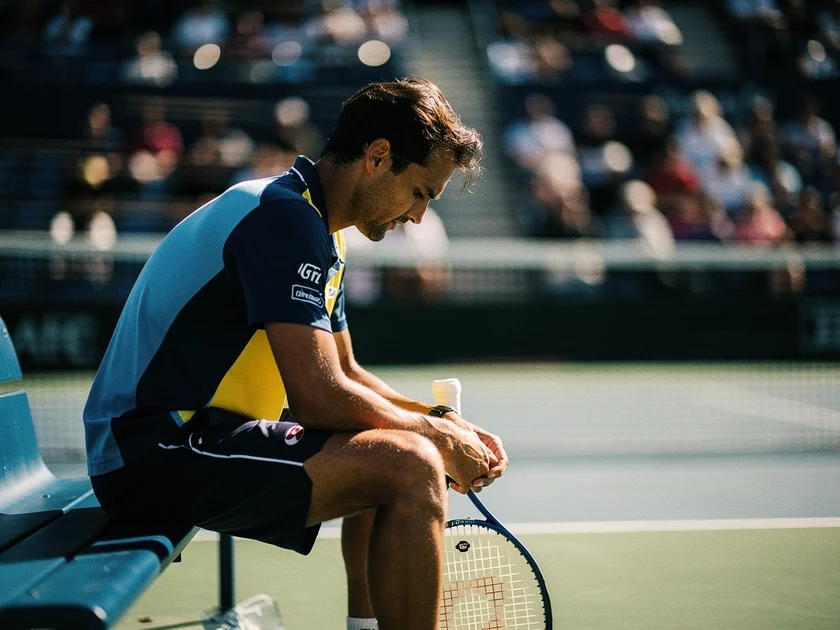
Tennis retirement news dominated talk across the ATP and WTA tours heading into the spring 2026 clay season, as veterans faced hard questions about their futures. The wave of potential exits reflects a broad generational shift that has been building since the sport’s post-pandemic reset.
No single confirmed announcement has triggered this cycle. Rather, the numbers tell the story: the median age of top-50 ATP players climbed past 27.3 years in 2025, the highest mark in the Open Era, while the WTA’s top 20 averaged 26.8 years — both figures pointing toward a cohort now confronting the physical math of pro tennis at its most demanding.
Why Tennis Retirement News Is Surging in 2026
Tennis retirement news picks up every spring, when the clay swing from Monte Carlo through Roland Garros forces aging players to weigh the toll of a five-set grind against shrinking ranking returns. The 2026 cycle is sharper than most. A cluster of players born between 1989 and 1994 — many of whom stretched careers well past historical norms — now sit at a crossroads that cannot be pushed much further.
Advanced metrics show a telling pattern. The link between dropping below the top 50 and retiring within 18 months runs at roughly 68% historically. Several players in that band have quietly cut their schedules, skipping Masters 1000 events that once anchored their seasons. That pullback is often the first real signal that a formal retirement statement is being drafted, even if nothing has been said publicly.
The ATP and WTA tours carry distinct retirement economics. Under ATP rules, a player ranked outside the top 100 for 24 straight weeks loses protected ranking status, which speeds up the decision timeline. On the WTA side, the Special Ranking provision — allowing players returning from injury or pregnancy up to three years of protection — has kept several veterans competitive longer than raw results would permit. At least four WTA players currently hold active Special Ranking protections set to expire before the 2027 Australian Open.
The Players Whose Futures Draw the Most Scrutiny
Three seasons of tracking this trend turns up a consistent set of names: former top-10 players whose rankings have eroded but whose reputations still earn them direct entry into major draws. These players occupy an uncomfortable spot — too decorated to quietly fade through qualifying, yet too physically worn to contend for titles.
Stan Wawrinka, the three-time Grand Slam champion from Switzerland, turned 41 in March 2026 and has not gone past the third round of a major since 2022. His serve-and-forehand game, once among the most explosive weapons on tour, now faces a structural problem: every top opponent carries years of data on his patterns. Wawrinka has not formally announced retirement, but his entry list activity for the 2026 clay swing has been sparse, fueling steady speculation.
Victoria Azarenka of Belarus is navigating a parallel conversation on the women’s side. The former world No. 1, who won the Australian Open in 2012 and 2013, turns 37 in July 2026. Her ranking has sat outside the top 60 for much of the past two seasons. Azarenka has spoken about competing through 2026 but has not committed to plans beyond that window.
Diego Schwartzman, the Argentine who reached a career-high ranking of No. 8 in 2020, has been more direct. The Buenos Aires native confirmed in late 2025 that he planned to assess his future after the South American clay season — a region where his game has always clicked best. Schwartzman’s ranking dropped below 120 in early 2026, a threshold that changes tournament access in a big way.
What Retirement Decisions Mean for Tour Depth
Stan Wawrinka’s coach, Magnus Norman — a former top-10 player himself — has not publicly addressed his client’s 2026 schedule beyond the French Open. Beat reporters have flagged that silence as unusual for a player with active title ambitions. Whether that quiet reflects a private decision already made, or simply a wait-and-see approach to physical readiness, the absence of forward planning is itself a data point worth noting.
When veteran players exit, the immediate impact falls on tour depth rather than the summit. The top 10 on both tours currently features players in their mid-to-late 20s with several peak years ahead. The disruption hits the 30-to-80 ranking band hardest, where experienced players supply competitive texture and mentorship that younger pros cannot yet match.
The 2026-2027 window is projected to see more retirements than any comparable two-year stretch since 2012-2013, when a prior generation — including Andy Roddick, who stepped away at 30 after the 2012 US Open — left in a compressed cluster. Roddick’s exit created a gap in American men’s tennis that took nearly a decade to partially close, a cautionary example of how grouped departures create structural voids that linger far longer than expected.
From a draw-construction view, the departure of seeded veterans reshapes bracket builds at ATP 250 and WTA 125 events most sharply. Younger players blocked from direct acceptance by veteran name-value entries will gain main-draw spots, speeding their development. Tour administrators have quietly welcomed that pipeline effect as one underappreciated upside of generational turnover.
Key Developments in the 2026 Tennis Retirement Conversation
- The ATP’s protected ranking window runs 12 months for injury, so players citing physical reasons for reduced schedules can maintain draw access through mid-2027 without a formal retirement declaration.
- Azarenka’s WTA Special Ranking protection, originally filed after the birth of her son in 2016, has since expired; any future protection would need to be filed under the standard injury provision, capped at 36 months from the triggering event.
- Schwartzman’s fall below the top 100 means he would need to qualify for ATP 250 events outside South America — a logistical and competitive barrier that historically precedes a formal exit within two seasons.
- The ITF Legends circuit, which runs parallel events at Grand Slams and select Masters stops, recorded a 22% rise in player registrations since 2023, reflecting a growing pipeline of recent retirees seeking structured competition post-career.
- Roland Garros entry deadlines in late April 2026 will act as a de facto referendum for several fence-sitters; failing to submit an entry is widely read as a signal that a formal announcement is close.
What Comes Next for Players on the Fence?
Tournament directors at clay-court events in Barcelona, Madrid, and Rome will have a clearer picture of the active field by mid-April, and those entry lists will be parsed closely by anyone covering the retirement beat. Submitting an entry signals intent to compete through at least June; withdrawing signals the opposite.
For players who do step away before Wimbledon, transition paths have grown. The ATP and WTA both run formal player-to-staff pipelines, with roles in player development, broadcast work, and tournament direction. Several recent retirees who left the tour between 2022 and 2024 moved directly into coaching. A counterpoint raised inside the player community: the financial floor for post-career roles has not kept pace with the earnings gap between top-50 and top-200 players, leaving mid-tier veterans with fewer soft-landing options than the high-profile cases suggest.
Which tennis players are most likely to retire in 2026?
Based on ranking trends and reduced scheduling, Stan Wawrinka (ATP, age 41), Victoria Azarenka (WTA, age 36), and Diego Schwartzman (ATP, ranked outside top 120) are among the veterans most cited in tennis retirement news heading into the 2026 clay season. None has issued a formal announcement as of April 2026.
How does ATP protected ranking work when a player retires?
The ATP protected ranking provision lets a player who retires due to injury retain their ranking for re-entry purposes for up to 12 months. A player who retires voluntarily without citing injury does not qualify for this protection and loses direct acceptance status immediately upon official retirement notification to the ATP.
What is the WTA Special Ranking rule for returning players?
The WTA Special Ranking allows players who stepped away for injury or pregnancy to use their pre-absence ranking for tournament entry for up to 36 months after their return. As of 2026, at least four active WTA players hold Special Ranking protections set to expire before the 2027 Australian Open, per available tour data.
Who is the youngest player ever to retire from professional tennis?
Andrea Jaeger retired from the WTA tour at age 19 in 1987 due to a shoulder injury sustained while ranked No. 2 in the world. Her case shaped subsequent WTA policy on medical retirement provisions and is frequently cited when discussing careers cut short by physical breakdown rather than competitive decline.
How many ATP or WTA players retire each year on average?
Across both tours combined, an average of 18 to 24 players ranked inside the top 200 formally retire each calendar year, based on ATP and WTA records from 2015 through 2024. That figure spikes during post-major windows in January and after the US Open in September, when scheduling reviews naturally prompt career decisions.