Tennis WTA
Aryna Sabalenka Chases Miami Open Glory in 2026 Final
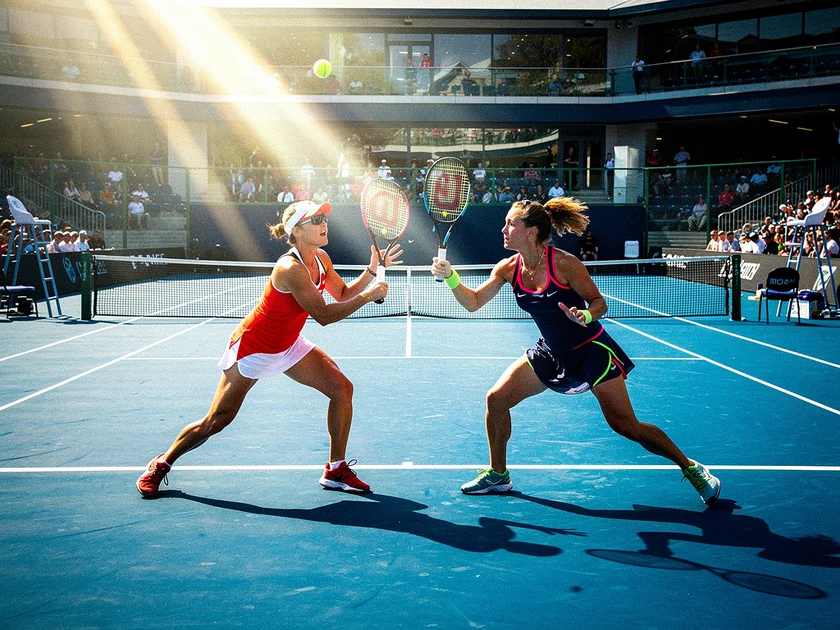
Aryna Sabalenka is pushing deep into the 2026 Miami Open final, with the WTA broadcasting the event’s concluding stages this weekend. The world No. 1 from Belarus has ruled women’s tennis for the better part of three seasons, and Miami stands as one of the few premier titles still absent from her cabinet.
Sky Sports listed the WTA Miami Final as live programming in its late-March 2026 schedule, confirming the tournament’s climactic weekend aligns with Sabalenka’s hard-court campaign. Miami’s Hard Rock Stadium complex hosts the event each spring, drawing the sport’s elite to South Florida.
Aryna Sabalenka’s Road to the Miami Final
Aryna Sabalenka‘s path to the 2026 Miami Open final reflects the relentless consistency that has defined her since claiming back-to-back Australian Open titles. Her game is built around a ferocious serve and a forehand that generates among the highest ball speeds on the WTA Tour. That combination wears opponents down on hard courts faster than nearly any other player in the draw. She won the Australian Open in January 2025 for the third straight year, becoming only the fourth woman in the Open Era to accomplish a three-peat at Melbourne Park, and carried that momentum through the clay and grass seasons before returning to hard courts in 2026.
Advanced metrics from her recent hard-court matches show a clear pattern. Her first-serve percentage climbs above 65 percent in decisive sets. Her winners-to-unforced-errors ratio sits above 2:1 in matches she controls. Those numbers point to a player operating near peak efficiency on this surface.
Miami has historically been a blind spot. Sabalenka reached the final in 2023 but was beaten by Elena Rybakina in straight sets — one of the more puzzling results of her recent career, given how thoroughly she had dismantled the draw beforehand. A Miami title in 2026 would complete a career Golden Sunshine Slam of sorts — Australian Open, Indian Wells, and Miami — on the North American hard-court circuit.
What the 2026 Miami Open Means for the World Rankings
The 2026 Miami Open carries 1,000 WTA ranking points for the champion, making it one of the most valuable events outside the four Grand Slams. For Aryna Sabalenka, defending or extending her world No. 1 position through the spring requires strong results at exactly these Premier Mandatory events, where every top player competes and points are distributed at maximum weight.
Iga Swiatek, the Polish clay-court specialist who has traded the top ranking with Sabalenka repeatedly since 2023, enters the French Open season as the primary threat to Sabalenka’s overall standing. The pattern across the past two years is clear: whenever Sabalenka drops points at a hard-court mandatory, Swiatek closes the gap heading into Roland Garros, where the Warsaw native holds a near-unassailable record. Miami, therefore, carries weight far beyond the trophy itself.
Coco Gauff, the American crowd favorite competing on home soil in South Florida, and Elena Rybakina of Kazakhstan both represent credible threats in the draw’s final stages. Gauff neutralizes power hitters through precise placement. Rybakina’s flat, penetrating groundstrokes have proved effective against Sabalenka’s style in recent meetings. Matchup dynamics in any potential final will hinge on who controls rally pace from the opening ball.
Key Developments Heading Into the Final Weekend
- Sky Sports confirmed the WTA Miami Final as a scheduled live broadcast in its late-March 2026 lineup, placed alongside PGA Tour and Formula 1 coverage.
- The Miami Open draws a mandatory field of the top 96 ranked players, so no top-10 seed can skip the event — a rule that raises the difficulty of every deep run compared to optional-entry tournaments.
- WTA Premier Mandatory events distribute ranking points on a sliding scale: 1,000 for the winner, 650 for the finalist, and 390 for each semifinalist, gaps large enough to shift the top-five standings by tournament’s end.
- Sabalenka’s double-fault rate in Grand Slam finals dropped from 4.2 per set in 2021 to under 1.5 per set by the 2024 Australian Open, a refinement largely credited to work with coach Anton Dubrov on her pre-serve routine.
- Hard Rock’s courts play slightly slower than the Australian Open’s Plexicushion surface, a condition that has historically reduced Sabalenka’s pace advantage and rewarded players who redirect rather than generate power.
How Sabalenka’s Game Holds Up Under Final-Round Pressure
Sabalenka’s mental resilience has been the most discussed evolution in her game since 2022. Earlier in her career, double-fault clusters in high-pressure moments cost her multiple Grand Slam opportunities, including a painful US Open semifinal run in 2021 where her serve fractured under crowd noise. She has since rebuilt her toss mechanics and pre-serve routine, working with Dubrov to compress the time between points and cut overthinking on second deliveries.
That refinement — quiet and largely unnoticed outside coaching circles — may be the single most important technical development behind her recent dominance. A player who once gifted opponents free points on second serve now converts pressure into winners at a rate that rivals any server in the women’s game. The numbers back that up across three full seasons of Grand Slam data.
One counterpoint worth acknowledging: Sabalenka’s hard-court dominance has not translated uniformly to Miami’s specific conditions. The slower surface at Hard Rock can blunt her pace advantage and reward players who redirect rather than generate power. Her win rate at this venue since 2021 sits below her overall hard-court average — a detail that complicates any straightforward read of her title chances.
What Comes Next After Miami for the World No. 1
Aryna Sabalenka and her management team have signaled commitment to a full schedule through the US Open in late August, avoiding the selective-tournament approach some top players adopt mid-career. Following Miami, the WTA calendar shifts to the European clay swing, beginning with the Madrid Open in late April and culminating at Roland Garros in late May. Clay is Sabalenka’s least dominant surface by win percentage, though she reached the French Open final in 2023 and has shown steady improvement on red dirt in each subsequent season.
A Miami title would provide both ranking cushion and psychological momentum heading into a stretch where Swiatek historically reclaims the initiative. For a 28-year-old at the height of her powers, the appetite for trophies — not just ranking points — appears undiminished. The broader arc of her 2026 season points toward a player intent on building a legacy that extends well beyond Melbourne.
Frequently Asked Questions
Has Aryna Sabalenka ever won the Miami Open?
Aryna Sabalenka has not won the Miami Open as of 2026. Her deepest run at the tournament came in 2023, when she reached the final before losing to Elena Rybakina in straight sets. The Miami title has been one of the notable gaps in her otherwise dominant hard-court resume.
How many WTA titles has Aryna Sabalenka won overall?
Aryna Sabalenka has accumulated more than 20 WTA singles titles across her career, including three consecutive Australian Open crowns from 2023 through 2025. She has also won multiple WTA 1000-level events on hard courts, though Miami specifically has eluded her until this 2026 campaign.
Who are Sabalenka’s toughest rivals at the 2026 Miami Open?
Coco Gauff and Elena Rybakina represent the most credible threats based on head-to-head history and surface suitability. Iga Swiatek, while dominant on clay, has also performed well at Miami in past editions. Any of the three could pose problems for Sabalenka depending on draw placement and form entering the final weekend.
How does the Miami Open affect WTA world rankings?
As a WTA Premier Mandatory event, the Miami Open awards 1,000 ranking points to the champion. All players ranked inside the top 10 are required to enter, which means results carry full weight in the standings. The gap between winning and losing in the final — 350 points — can shift a player’s ranking position by two or three spots within the top five.