Tennis WTA
Aryna Sabalenka Excels at Indian Wells and Miami Open 2026
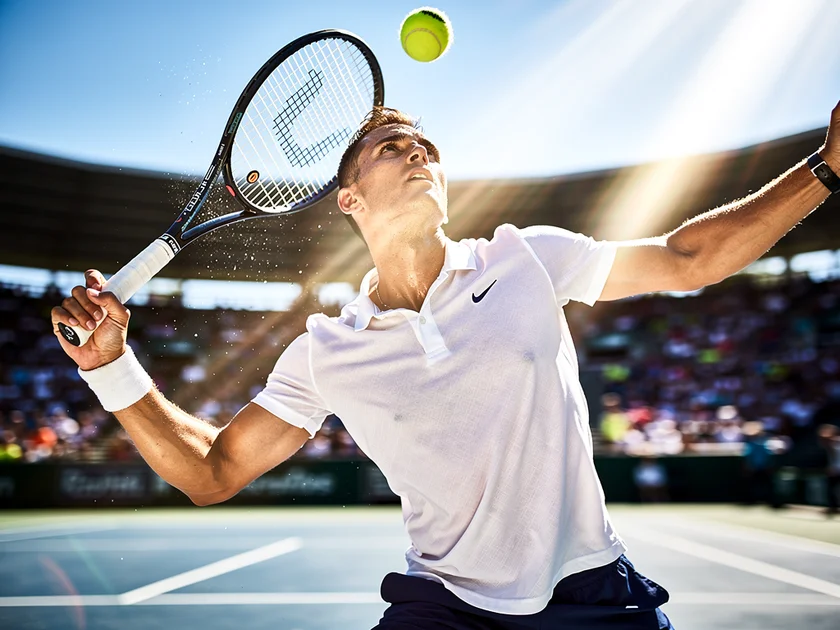
Aryna Sabalenka delivered some of her most commanding hard-court tennis of the 2026 season, excelling through both the BNP Paribas Open at Indian Wells and the Miami Open, per ESPN. The Belarusian world No. 1 closed out the North American hard-court swing with her game at its sharpest, setting up a pivotal transition to clay.
The results arrived at a moment when WTA tour depth has never been sharper. Novak Djokovic withdrew from Miami with a shoulder injury, Carlos Alcaraz fell to Sebastian Korda in the third round on the men’s side, and emerging talents like Alex Eala were testing themselves against elite competition — all of which framed Sabalenka’s consistency as the defining storyline of the stretch.
How Sabalenka Performed at the Sunshine Double
Aryna Sabalenka’s run through both events reinforced her status as the tour’s most complete hard-court operator. ESPN’s recap cited her excellence as a primary takeaway, placing her above the field in sustained level and competitive output. Her serve — historically one of the WTA’s most powerful weapons — functioned as an offensive launching pad rather than merely a neutral opener.
Indian Wells and Miami together form what the tour calls the Sunshine Double, a back-to-back Masters-level stretch that carries enormous ranking weight. Winning or making deep runs at both events builds psychological value heading into Roland Garros preparation. Sabalenka sustained elite output across two very different environments: fast hard courts in the California desert and the slower, humid conditions of South Florida. That kind of adaptability has defined her recent seasons.
The advanced metrics of her 2026 hard-court run tell a clear story. First-strike tennis and aggressive baseline positioning made her the most consistent force in both draws. Few rivals entered clay season carrying comparable momentum.
The Clay Transition: A Different Equation
Clay represents a genuine challenge for Aryna Sabalenka. Despite her hard-court dominance, the red dirt of Europe has historically been her most demanding surface. The slower bounce neutralizes her flat, penetrating groundstrokes and rewards heavy topspin players like Iga Świątek, who has won Roland Garros four times and counting.
Alex Eala — one of the tour’s most closely watched young players after her quarterfinal run at the Dubai Tennis Championships and back-to-back Round of 16 appearances at the two Florida-swing events — ran into immediate clay trouble. She lost in the round of 16 at the WTA 125 event in Oeiras, then fell in the round of 64 to Świątek at the Madrid Open and exited in the round of 128 at the Italian Open. Eala’s rapid stall on clay offers a useful lens: momentum built on hard courts does not transfer automatically, and the surface demands respect from everyone.
Sabalenka has worked extensively on generating more topspin off her backhand wing to cope with high-bouncing clay conditions. The technical adjustment has shown up in flashes at Roland Garros in recent years, though she has yet to claim the Paris title that would complete her Grand Slam collection. That gap is the most compelling open question of her career.
One alternative reading: some analysts argue that Sabalenka’s flat ball actually skids through Madrid’s altitude-affected clay differently than at sea-level venues, compressing points and limiting opponents’ recovery time. That dynamic historically favors big hitters and may give her an edge in the Spanish capital specifically.
Key Developments From the 2026 Hard-Court Swing
- ESPN’s post-tournament analysis listed Sabalenka’s excellence as a top takeaway from both hard-court Masters events, alongside Jannik Sinner’s return to form after his doping case was resolved.
- Eala strung together Round of 16 appearances at both Florida hard-court events after her Dubai quarterfinal, the most sustained hard-court run of her career to date.
- Eala’s three-set loss to Świątek in the Madrid round of 64 showed the Pole’s clay dominance extending to handling emerging opponents as well as established stars.
- Djokovic’s shoulder withdrawal from Miami underlined the physical toll the hard-court calendar places on top players entering clay season.
- Alcaraz’s third-round exit to Korda denied the Spaniard a confidence-building deep run ahead of the Madrid and Rome swing.
What Sabalenka’s Form Means for Madrid and Rome
Aryna Sabalenka enters the European clay season as the player the rest of the field must account for, even on a surface where Świątek has historically set the standard. Back-to-back strong results at the two premier hard-court Masters events give Sabalenka a confidence base that is difficult to manufacture through any other route on the calendar. Her WTA ranking — firmly at No. 1 entering the clay swing — means she draws favorable seedings at every event.
Madrid and Rome serve as the immediate proving grounds. Both events draw the full WTA elite, and Sabalenka’s physical condition coming off a demanding stretch will shape her trajectory. Her game arrives sharp. The clay surface, though, rewards patience and spin over raw power, which can complicate longer matches against baseliners who thrive on extended rallies.
Roland Garros looms as the ultimate measuring stick. Sabalenka has the form, the ranking, and the motivation. Whether the clay cooperates is a separate matter entirely — and that uncertainty is precisely what makes the next eight weeks so compelling.
Frequently Asked Questions
How many Grand Slam titles has Aryna Sabalenka won?
Sabalenka has won three Grand Slam singles titles: the Australian Open in 2023, 2024, and 2025. She has not yet won Roland Garros, Wimbledon, or the US Open, making the French Open the most prominent missing piece in her collection.
What is the Sunshine Double in tennis?
The Sunshine Double refers to the consecutive WTA and ATP Masters 1000 events held at Indian Wells, California, and Miami, Florida, each March. Both tournaments offer the maximum ranking points outside the four Grand Slams, making them among the most strategically important stops on the annual calendar.
Why did Novak Djokovic withdraw from the 2026 Miami Open?
Djokovic withdrew from the 2026 Miami Open due to a shoulder injury. The withdrawal was part of a broader pattern of physical management concerns for the veteran Serb as he navigated a demanding hard-court calendar ahead of the clay season.
How did Alex Eala perform at the 2026 Indian Wells and Miami events?
Eala reached the Round of 16 at both the BNP Paribas Open at Indian Wells and the Miami Open in 2026, following a quarterfinal appearance at the Dubai Tennis Championships. Her three-event hard-court stretch represented the strongest sustained run of her professional career to that point.
Who beat Carlos Alcaraz at the 2026 Miami Open?
Sebastian Korda defeated Carlos Alcaraz in the third round at the 2026 Miami Open, ending the Spaniard’s run before the second week and denying him the ranking points and momentum that a deep Miami run typically provides heading into the European clay season.